

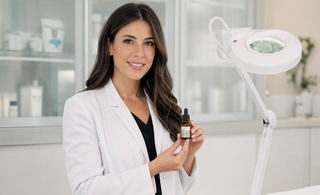
Quick Summary
While mass-market products provide basic daily maintenance, understanding the critical divide in professional skincare vs over the counter options is essential for resolving persistent concerns like photoaging, hyperpigmentation, and acne. Christina Cosmeceuticals demonstrates that visible cellular transformation requires structured, step-by-step clinical protocols and optimized delivery systems rather than relying on isolated retail hero products. Readers will discover how to transition past the limitations of standalone drugstore products by adopting targeted professional-grade regimens or consulting licensed estheticians for guided correction.
Professional Skincare vs Over the Counter: Why Protocol Beats Product
You can cleanse well, layer a few popular serums, and still end up with skin that looks exactly the same after months of effort. That is usually where the debate around professional skincare vs over the counter starts. The issue is not whether a product sounds impressive on the label. It is whether the formula, the strength, and the order of use are built to create visible change.
That is where Christina Cosmeceuticals fits into the picture. Professional cosmeceuticals are not just stronger versions of retail skincare. They are designed around condition-specific protocols, with products chosen to work together across home care and in-clinic treatment. That matters for concerns like acne, pigment, and visible aging, where one product on its own is rarely enough.[4]
Consumers are also paying more attention to guided care and outcomes. In the 2025 ASDS Consumer Survey on Cosmetic Dermatologic Procedures, 70% of respondents said they were considering a cosmetic procedure, which reflects a wider move toward provider-led skin decisions. If you are trying to get past trial and error, the answer is usually not a better product. It is a better plan.[3]
Introduction: The Real Divide Is Not Strength - It Is Strategy
The real difference in professional skincare vs over the counter is not just ingredient percentage. It is how the routine is built. Over-the-counter products are made for broad, low-risk use and everyday maintenance. Professional cosmeceuticals are built for protocol-based correction, with actives sequenced to address specific concerns over time.
| Skincare Category | Primary Objective |
|---|---|
| Over the Counter (OTC) | Low-risk daily maintenance |
| Professional Cosmeceuticals | Targeted, protocol-based correction |
This is why brands like Christina Cosmeceuticals are built around step-by-step systems rather than single hero products. A cleanser, treatment serum, and recovery product are meant to work as a sequence. For licensed estheticians, that structure matters even more when building esthetician protocols for aging skin or mature skin protocols that need to stay effective without overwhelming the barrier.
Publicly accessible, neutral-source data directly comparing professional skincare and over-the-counter skincare in one statistic set is limited. What is clear, though, is that consumers trust guidance. ASDS survey data show that provider reputation and review sources play a major role in cosmetic decision-making, which lines up with how people actually buy skincare when they want results, not just a nice texture or scent.[1]
What Is the Actual Difference Between Professional Skincare and Over the Counter Products?
Professional skincare products are built with higher active ingredient concentrations, stronger delivery systems, and a clinical use case in mind. Over-the-counter products are designed for unsupervised daily use, so they tend to be gentler and more forgiving, but also more limited when the goal is correction rather than maintenance.
Regulatory classification and what it means for your skin
The gap between medical grade vs over the counter skincare starts with how the products are intended to be used. Retail products have to remain safe for broad consumer use, which naturally limits how aggressive they can be. Professional products are formulated for trained guidance, which gives brands more room to build active systems for correction.[5]
Formulation philosophy: maintenance vs correction
Retail skincare is usually designed to support the surface. Professional formulas are built to move a concern forward. Christina Cosmeceuticals develops condition-specific lines, such as Comodex for acne and Forever Young for aging skin, as full regimens rather than isolated serums. That is the practical difference between a general routine and a protocol.
| Over-the-Counter Formulas | Professional Cosmeceuticals |
|---|---|
| Gentle daily maintenance | Targeted correction within a plan |
| Standalone retail use | Structured esthetician protocols for aging skin |
Clinical studies also support the value of structured regimens. In advanced protocol studies, participants saw better hydration and more even pigmentation than those using simpler routines. That does not mean every OTC product is ineffective. It means OTC is usually better at maintenance, while professional skincare is built to push past a plateau.
Do Professional Cosmeceuticals Actually Contain Higher Active Ingredient Concentrations?
Often, yes. Professional formulas commonly use retinoids, vitamin C, peptides, and exfoliating acids at levels that may be too irritating for unsupervised use in a retail setting. The point is not just having more active ingredients. The point is using them in a way that makes sense for the skin barrier and the treatment goal.
Where the concentration gap matters most
This matters most in routines for photoaging, acne, and pigmentation. A product can be potent and still not be useful if it is used alone, in the wrong order, or too aggressively. According to YouGov, a 2024 survey of 1,116 U.S. adults found that 52% spent 5 minutes or less on at-home skincare daily. In routines that short, every step needs to count, which is one reason protocol-based care tends to outperform random product stacking.[2]
Delivery systems: why the same ingredient performs differently
The ingredient list only tells part of the story. Two products can both contain the same active, but the way that ingredient is delivered changes how it performs. Professional brands often use systems such as:
- Liposomal encapsulation: Helps protect unstable actives and support delivery.
- Time-release matrices: Releases ingredients gradually to reduce the chance of irritation.
- pH optimization: Sets the formula in a range that supports the active’s performance.
That kind of formulation work is one reason professional skincare vs over the counter is not a fair one-to-one comparison. The products may share ingredient names, but not the same delivery logic.
Can OTC Products Deliver the Same Anti-Aging Results as Professional Formulas?
OTC anti-aging products can absolutely help. They can improve hydration, smooth texture, and support sun protection, which is a major part of aging prevention. But when the concern is deeper wrinkles, uneven pigment, or multiple signs of aging at once, over-the-counter products usually hit a ceiling faster than professional formulas.
What the clinical evidence actually shows
Some mass-market systems do produce statistically significant improvement in photoaged skin within weeks, and that is worth acknowledging. But more advanced regimens tend to perform better across several markers at once, including hydration depth, roughness, wrinkle appearance, and pigment evenness. The pattern is consistent: OTC can help, but professional skincare is usually better suited for correction.
The ceiling effect of maintenance-grade skincare
Mass-market products reach a point where they cannot safely go much further without professional oversight. That is why mature skin protocols, acne correction plans, and pigment routines often move into cosmeceutical territory. Christina Cosmeceuticals step-by-step protocols are designed to work beyond that ceiling by sequencing actives, recovery, and support products in a way that retail routines usually do not.
| Aging Marker | OTC Product | Professional Protocol |
|---|---|---|
| Hydration | Good for surface support | Built for deeper correction |
| Deep Wrinkles | Limited smoothing | Better support for structural change |
| Pigmentation | Mild brightening | More targeted correction |
Why Professional Skincare Costs More - and When the Investment Makes Sense

Professional skincare costs more because the formula has more going on behind the scenes. Higher-grade raw materials, more advanced delivery systems, stability testing, and professional education all add to the cost. You are not only paying for the bottle. You are paying for the system around it.
What you are actually paying for beyond the label
Professional lines often sit in the $40 to $90 range because they are made for a smaller, more specific audience and are usually supported by training, clinical logic, and protocol design. For licensed estheticians, that support is part of the value. For clients, it means the product is meant to do a job, not just sit on the shelf and feel nice.
The cost-per-result calculation most people skip
This is where the question of is professional skincare worth the money becomes practical. A cheaper product that does not move the needle is still a wasted spend. A more expensive product that produces visible change in a few weeks can be the better purchase, especially if it replaces months of product hopping.
| Approach | Initial Cost | Expected Timeline for Results | True Value |
|---|---|---|---|
| Mass Market | $15 to $25 | 6 to 12 months, often with limited change | Higher long-term spend from constant replacement |
| Professional | $70 to $90 | 4 to 8 weeks, depending on concern and consistency | More targeted correction with fewer dead-end purchases |
For many clients, the better value is the regimen that actually gets used consistently and matched to the skin’s condition. That is where protocol beats product.
How Protocol-Based Skincare Outperforms Product-Based Routines
Protocol-based skincare works better because it is planned. Instead of picking random products one at a time, the routine is built to move the skin through preparation, correction, and recovery. That sequencing matters for barrier health, tolerance, and visible results.
The sequencing advantage professionals use
Retail consumers often combine ingredients that are not ideal together, or they use too many actives at once. Professional brands are built differently. Christina Cosmeceuticals step-by-step protocols are designed so one product prepares the skin, the next treats the concern, and the last supports recovery.
Effective esthetician protocols for aging skin usually follow a clear structure:
- Preparation: Enzymatic exfoliation removes buildup without stripping the barrier.
- Correction: A retinol or other active is introduced at a level the skin can tolerate.
- Recovery: A barrier-supporting cream helps reduce irritation and support repair.
| Feature | OTC Product Routines | Professional Protocols |
|---|---|---|
| Synergy | Can be inconsistent | Designed to work in sequence |
| Progression | Usually static | Can be adjusted over time |
Pairing in-clinic treatments with home-care regimens
Complex concerns usually respond best to a dual approach. Pigmentation, acne, and mature skin issues often need in-clinic treatment plus home care that supports the result between visits. For example, a professional may pair a peel such as Rose De Mer with a matching home regimen to help maintain momentum after the appointment.
Patients are already using OTC skincare, and when clinicians guide those choices intentionally, cosmeceuticals can meaningfully enhance outcomes, tolerability, and long-term disease control.
Professional Skincare vs Over the Counter: Side-by-Side Comparison
When you compare professional skincare vs over the counter side by side, the difference is not just strength. It is purpose. OTC formulas are usually built for general prevention and maintenance, while professional cosmeceuticals are built for targeted correction through a structured plan.
| Criteria | Over the Counter Products | Professional Cosmeceuticals |
|---|---|---|
| Active Concentration | Low to moderate | Higher, clinically directed |
| Delivery Technology | Basic surface absorption | Advanced systems such as liposomal encapsulation |
| Protocol Integration | Often self-selected and inconsistent | Structured and sequenced |
| Suitability for Complex Conditions | Best for general maintenance | Better for acne, pigment, and visible aging |
| Expected Visible Results | Gradual and usually subtle | More noticeable when used correctly |
For simple daily upkeep, OTC may be enough. For visible correction, clinical skincare vs otc is a different conversation. Christina Cosmeceuticals bridges professional and home care with condition-specific lines that can be used as part of a guided regimen. For licensed estheticians and serious skincare users, that is often the point where results become more predictable.
Do You Need a License or Esthetician Consultation to Buy Professional Skincare?
You do not always need a license to buy professional skincare. Many brands offer pro-home products that are meant for consumer use. Even so, an esthetician consultation is often the better starting point because it helps match the product to the skin condition and the treatment goal.
Professional-only vs pro-home product tiers
Some treatment products, especially stronger peels and in-clinic services, are reserved for licensed use. Other lines are built for home care and can be used safely when the routine is set up well. Christina Cosmeceuticals offers both professional and pro-home options, which makes it easier to build a routine that fits the client’s level of care.
How to start the transition from OTC to clinical skincare
If you are moving from retail products to a professional regimen, the process should be deliberate:
- Assessment: Get a proper skin evaluation.
- Targeted regimen: Choose a line built for the concern, not just the skin type.
- Sequential application: Follow a protocol instead of mixing products at random.
- In-clinic pairing: Combine home care with professional treatments when appropriate.
That is the cleanest way to move from drugstore skincare to a routine with more structure and better odds of visible change.
FAQ: Professional Skincare vs Over the Counter
Here are the questions people ask most often when they are deciding whether to stay with OTC products or move into a professional routine.
What is the difference between professional skincare and over the counter products? Professional skincare is built for targeted correction with stronger actives and protocol-based use. OTC products are made for broad, low-risk daily maintenance.
Is medical grade or professional skincare really better than drugstore skincare? For complex concerns like pigment, acne, and visible aging, yes, professional skincare is usually better suited. Drugstore skincare can help with basic maintenance, but it is less likely to produce major change on its own.
Why are professional skincare products more expensive than OTC options? They usually cost more because of higher-grade ingredients, better delivery systems, stability testing, and the support that comes with professional guidance.
Do professional cosmeceuticals have higher concentrations of active ingredients? Often they do. More importantly, those actives are built into a system that helps them be used more effectively and, in many cases, more safely.
Can over the counter products deliver the same anti-aging results as professional formulas? OTC products can improve hydration and support prevention, but they usually do not match professional formulas for deeper correction or multi-step aging concerns.
Do you need a license or aesthetician consultation to buy professional skincare? Not always. Some professional brands offer home-care lines, but a licensed esthetician can help you choose the right products and build a better protocol.
Can I mix professional skincare with my current OTC products? Sometimes, but it is usually better to use a coordinated routine. Mixing too many unrelated products can make it harder to judge what is helping and what is irritating the skin.
If you want results that are easier to track, the better move is usually to choose a protocol, follow it consistently, and let the routine do the work instead of changing products every few weeks.
Sources
- Analyzing Social Media Trends in Cosmeceuticals - PMC - NIH - pmc.ncbi.nlm.nih.gov (2025)
- When do U.S. consumers buy sunscreen and what matters most ... - yougov.com
- 2025 ASDS Survey: 70% of Consumers Considering ... - practicaldermatology.com (2025)
- [PDF] Face value: Unmasking US skincare shoppers in 2025 - Cloudfront.net - d3nkl3psvxxpe9.cloudfront.net (2025)
- Dermatologists Top the List as Key Influencers in Patients ... - asds.net (2025)
Frequently Asked Questions
How should I phase out my OTC products when switching to a professional protocol?
Start by replacing your primary corrective step first, such as introducing a targeted treatment serum from a system like Christina Cosmeceuticals, while keeping a gentle cleanser and moisturizer. Once your skin builds tolerance over two to three weeks, systematically integrate the matching preparation and recovery products to complete the protocol.
What signs indicate my skin has hit a plateau with over-the-counter skincare?
A plateau is typically marked by lingering hyperpigmentation, persistent breakout cycles, or fine lines that show no further improvement despite consistent product use. When surface-level OTC formulations stop progressing, transitioning to advanced protocols from Christina Cosmeceuticals provides the deeper delivery systems and higher active concentrations needed for cellular renewal.
How do pro-home skincare regimens differ from in-clinic professional treatments?
In-clinic treatments, such as intensive peels like Christina Cosmeceuticals Rose De Mer, provide rapid, professional-only clinical correction. Pro-home regimens feature calibrated active concentrations formulated to maintain, extend, and enhance those in-office outcomes safely on a daily basis.