

Quick Summary
Achieving lasting skin clarity requires moving beyond isolated products toward structured hyperpigmentation treatments that address pigment correction, UV defense, and barrier repair simultaneously. Clinical evidence shows combination protocols deliver the highest success rates, a strategy embodied by Christina Cosmeceuticals through the synergy of professional Rose De Mer resurfacing and targeted Illustrious home care. Readers will understand how to customize active ingredients for melasma and post-inflammatory hyperpigmentation, prevent rebound discoloration, and explore the Illustrious collection to build a comprehensive brightening routine.
Hyperpigmentation Treatments That Correct, Prevent, and Last
When dark spots keep returning after a brightening serum or peel, the problem is usually not lack of effort, it is the treatment plan. A 2024 systematic review that included 41 studies and 877 patients found that for post-inflammatory hyperpigmentation, complete response rates were 18.1% with laser and energy-based devices, 5.4% with topical treatments, and 2.4% with combination therapies. The practical takeaway is simple, hyperpigmentation treatments work best as a protocol, not as a single product or procedure.[2]
That is where Christina Cosmeceuticals fits into professional practice. Its approach connects in-clinic protocols with home care through targeted brightening lines such as Illustrious and resurfacing support such as Rose De Mer. For stubborn discoloration, the real advantage comes from addressing correction, prevention, barrier support, and UV defense together. Below, we look at what works for melasma and post-inflammatory hyperpigmentation, why professional cosmeceuticals often outperform basic over-the-counter options, and how to build a routine that helps results hold.
Hyperpigmentation Treatments: A Protocol-First Approach to Lasting Results
The best hyperpigmentation treatment for face protocols treat discoloration as a cycle of inflammation, barrier disruption, and UV exposure. A real plan does not stop at pigment suppression, it also protects the skin from the triggers that keep pigment coming back.
According to a 2024 systematic review published in PubMed-indexed literature and in the Journal of Drugs in Dermatology, complete response rates for post-inflammatory hyperpigmentation were 18.1% with laser devices, 5.4% with topicals, and 2.4% with combination therapies. To support longer-lasting results, licensed professionals usually think in three phases:[5]
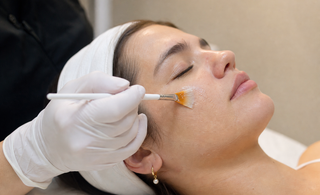
- Clinical resurfacing: Professional treatments, such as the Rose De Mer peel by Christina Cosmeceuticals, can help accelerate turnover.
- Targeted correction: Advanced cosmeceuticals deliver high-potency topical antioxidants for skin and other pigment-focused actives. Instead of chasing the best serums for dark spots one by one, professionals often choose a system such as the Illustrious line to help reduce pigment without adding unnecessary irritation.
- Barrier maintenance: Daily use of christina skincare products helps support the lipid barrier, reduce rebound pigmentation, and protect skin that is already under stress.
Quick Comparison: Professional Hyperpigmentation Treatment Methods at a Glance
The best hyperpigmentation treatments usually rely on structured combination therapy rather than isolated procedures. In the same 2024 review, combination modalities had the highest partial response rate at 84.9%, compared with 72.4% for topicals, 61.2% for laser devices, and 33.3% for chemical peels.[4]
| Feature | Topical Cosmeceuticals | Chemical Peels | Combination Therapy |
|---|---|---|---|
| Best For | Steady daily fading | Exfoliation and resurfacing | Stubborn melasma and PIH |
| Typical Timeline | 8 to 12 weeks | 3 to 6 sessions | Ongoing management |
| Key Consideration | Needs daily compliance | Can trigger rebound pigment | Highest overall response |
| Model Approach | Illustrious brightening line | Rose De Mer resurfacing | Clinic plus home care |
A review article indexed in PubMed notes that topical options for melasma and post-inflammatory hyperpigmentation include retinoids, azelaic acid, hydroquinone, chemical peels, and cosmeceuticals. In practice, the best serums for dark spots and topical antioxidants for skin matter most when they are part of a structured regimen. Clinical protocols that start with barrier support before pigment correction tend to be better tolerated, especially in reactive or darker skin types.
1. What Is the Most Effective Treatment for Hyperpigmentation?
The most effective treatment for hyperpigmentation is a combination protocol that pairs targeted topical actives with professional treatments and daily broad-spectrum SPF. No single ingredient or device addresses every step in the pigment cycle.
The 2024 systematic review of 41 studies and 877 patients makes that point clearly. For post-inflammatory hyperpigmentation, combination therapies outperformed single-agent approaches in overall response. That matters because melanogenesis is driven by several triggers at once, including inflammation, barrier damage, UV exposure, and post-procedure rebound.
In real practice, the best hyperpigmentation treatment for face plans usually include:
- professional resurfacing when the skin can tolerate it
- topical pigment suppressors and antioxidants
- barrier repair between sessions
- strict photoprotection every day
Even the best serums for dark spots will fall short if the barrier stays inflamed. That is why professional hyperpigmentation treatment is usually built as a sequence, not a one-time correction.
2. Active Ingredients That Actually Fade Dark Spots and Melasma
The strongest active ingredients work through different pathways, which is why layered formulas often perform better than single-ingredient products. Retinoids increase cell turnover, vitamin C helps limit oxidative stress, niacinamide can reduce melanin transfer, and azelaic acid supports both pigment control and skin calmness.
Hydroquinone can be effective, but it is not a long-term answer for every patient. Some aggressive approaches can also backfire. In the 2024 review, 2.6% of patients treated with laser and energy-based devices experienced worsening post-inflammatory hyperpigmentation. That is a reminder that the best hyperpigmentation treatments are chosen with skin type, trigger history, and tolerance in mind.[3]
Tyrosinase Inhibitors vs. Melanin-Transfer Blockers
The best serums for dark spots usually combine ingredients across categories:
| Mechanism | Key Actives |
|---|---|
| Tyrosinase inhibition | Kojic acid, arbutin, azelaic acid |
| Melanin-transfer disruption | Niacinamide, licorice extract |
The Role of Retinoids and Topical Antioxidants for Skin
Topical antioxidants for skin help reduce oxidative stress before it turns into visible pigment. Retinoids add another layer by speeding turnover and helping uneven pigment fade more evenly. In a professional setting, those pathways are often combined inside a broader hyperpigmentation skin care routine that also includes barrier support and SPF.
3. Chemical Peels for Hyperpigmentation: What They Can and Cannot Do
Chemical peels can lighten hyperpigmentation, but they rarely clear deep pigment on their own. Superficial peels such as glycolic or salicylic acid help with epidermal turnover, while medium-depth peels reach deeper layers. Even so, if the trigger is still active, the skin can repigment.
Can chemical peels completely remove deep hyperpigmentation? Usually not. They can improve the look of discoloration, but they do not stop inflammation, UV exposure, or hormonal activity by themselves.
| Peel Depth | Target Level | Primary Use |
|---|---|---|
| Superficial | Epidermis | Surface discoloration |
| Medium | Dermal-epidermal junction | Stubborn pigment |
| Deep | Reticular dermis | Severe photodamage |
Peels need to be selected carefully, especially in darker skin tones. A 2024 SAGE review reported that post-inflammatory hyperpigmentation prevalence varies globally and is higher in darker skin types. Because of that, pre-peel preparation and post-peel barrier support are not optional.[1]
In clinic, the most reliable hyperpigmentation treatments pair resurfacing with home care. Christina Cosmeceuticals does this by combining the Rose De Mer professional resurfacing system with the Illustrious brightening line, which helps support pigment correction while the skin recovers.
4. Post-Inflammatory Hyperpigmentation vs. Melasma: Why the Treatment Differs
Post-inflammatory hyperpigmentation comes from skin injury, such as acne, over-exfoliation, burns, or aggressive procedures. Melasma is usually driven by hormones, UV exposure, and heat, which is why it tends to recur. The treatment plan should match the trigger.
PIH often responds well to time, pigment suppressors, and careful resurfacing. Melasma is more chronic and usually needs long-term management. In other words, the same aggressive approach that helps PIH may worsen melasma if it creates inflammation.
For PIH, professionals often use a more direct correction strategy. For melasma, they usually keep treatment gentler, with a stronger emphasis on prevention, topical antioxidants for skin, and consistent sunscreen use.
5. Why Professional Cosmeceuticals Outperform Over-the-Counter Options
Professional cosmeceuticals tend to outperform over-the-counter products because they are built for structured treatment plans, not general maintenance alone. They often use stronger actives, better delivery systems, and clearer step-by-step protocols that make sense in a clinical or spa setting.
For licensed estheticians, that matters because hyperpigmentation rarely improves with random product layering. A 12-week regimen that combined 0.5% retinol with a 30% vitamin C moisturizer showed measurable improvement in hyperpigmented and photodamaged skin in clinical trial data published in 2024. Results like that are easier to achieve when the routine is planned from the start.
| Feature | Over-the-Counter | Professional Cosmeceuticals |
|---|---|---|
| Formulation | Lower active concentrations | Higher-potency clinical formulas |
| Routine | Often self-directed | Structured step-by-step protocol |
This is where Christina Cosmeceuticals stands out. Rather than forcing clients to guess with generic dark spot corrector serum options, the brand offers a connected system. The Illustrious line focuses on brightening and UV defense, while Rose De Mer offers more intensive resurfacing support.
6. The Prevention Layer Most Protocols Miss: Barrier Support and Photoprotection
The part many hyperpigmentation treatments miss is prevention. If the barrier stays irritated, pigment keeps coming back. That is why photoprotection and barrier repair should be treated as active parts of the correction plan, not as afterthoughts.
Combination modalities that include strict photoprotection achieved an 84.9% partial response rate in the 2024 review. For that reason, daily SPF and barrier care belong in every pigment protocol. The Illustrious Day Cream SPF reflects that approach by combining pigment support, topical antioxidants for skin, and broad-spectrum UV defense.
In skin of color, broad-spectrum sunscreen combined with active depigmenting agents is preferable to sunscreen alone to reduce existing hyperpigmentation and prevent new lesions.
For professional use, a practical checklist looks like this:
- Assess barrier integrity before exfoliation or device work.
- Use anti-inflammatory support to reduce melanocyte stimulation.
- Prescribe broad-spectrum SPF that protects while supporting correction.
7. Building a Hyperpigmentation Skin Care Routine That Prevents Rebound
The best hyperpigmentation treatments hold up better when the daily routine is consistent. A good AM/PM plan keeps pigment suppression active while also supporting the skin between procedures.
Daily adherence matters more than aggressive treatment bursts. In the Journal of Drugs in Dermatology review, combination modalities had the strongest partial response rate, which fits what clinicians see in practice, steady routines beat sporadic correction.
Morning protocol: defend and brighten
- Cleanse: Use a gentle cleanser that does not strip the barrier.
- Defend: Apply topical antioxidants for skin to help reduce oxidative stress.
- Protect: Finish with a broad-spectrum SPF that also supports pigment control.
Evening protocol: correct and repair
- Purify: Remove makeup, sunscreen, and environmental buildup.
- Correct: Use the best serums for dark spots or a retinoid-based step, depending on tolerance.
- Repair: Seal in hydration with a barrier-supportive moisturizer.
Seasonal changes matter too. Many patients need more photoprotection in summer and a slower retinoid ramp-up if their skin gets dry or reactive in winter.
8. How Long Professional Hyperpigmentation Treatments Take to Work
Professional hyperpigmentation treatments usually show visible change within 4 to 12 weeks, depending on the depth of the pigment and how consistent the client is with home care. Superficial PIH often starts to fade within 4 to 8 weeks. Deeper pigment and melasma can take 3 to 6 months, and maintenance may still be needed after that.
One of the biggest reasons results stall is poor SPF compliance. Another is moving too quickly to aggressive procedures before the skin is ready. A 12-week facial regimen for hyperpigmented skin showed significant lightening in a clinical case study when patients stayed consistent.
Here is a practical timeline:
- 4 to 8 weeks: Surface spots begin to fade with the help of the best serums for dark spots and topical antioxidants for skin.
- 3 to 6 months: Deeper pigment becomes noticeably lighter.
- Ongoing: Melasma usually needs continued suppression and daily SPF.
9. Laser and Energy-Based Treatments: When Topicals Are Not Enough
When deeper pigment does not respond after several months of topical therapy, laser and energy-based treatments may be considered. Even then, devices should be treated as one part of the plan, not the whole plan. Without preparation and recovery support, they can trigger post-inflammatory hyperpigmentation, especially in darker skin tones.
In the 2024 review, complete response rates for post-inflammatory hyperpigmentation reached 18.1% with laser and energy-based devices. Those outcomes are useful, but they are not a substitute for barrier care and photoprotection.
| Device | Best For |
|---|---|
| Q-switched | Deep dermal pigment |
| Fractional | Textural resurfacing |
| IPL | Superficial discoloration |
To support better laser outcomes, professionals usually manage the inflammation cycle before and after treatment:
- Pre-condition: Use pigment-focused home care before the device session.
- Protect: Add topical antioxidants for skin to support the barrier.
- Recover: Continue with christina skincare products to calm inflammation and reduce rebound spots.
10. Choosing the Right Professional Hyperpigmentation Treatment for Your Client or Skin Type
Choosing the right hyperpigmentation treatment depends on the type of pigment, Fitzpatrick skin type, and how much downtime the client can handle. A conservative plan is usually smarter than an aggressive one if the barrier is already compromised.
Combination modalities had the strongest partial response rate in the 2024 review, which supports the way many clinicians already work, assess first, then build in phases.
- Assess the trigger: Decide whether the discoloration needs topical antioxidants for skin, resurfacing, or a stronger clinical intervention.
- Introduce actives slowly: Patch test and phase in treatment to reduce irritation.
- Connect clinic to home: Pair in-office care with a home routine that keeps pigment from returning.
Christina Cosmeceuticals fits that model well. The Illustrious line is designed for brightening, anti-pigmentation support, and UV defense, while Rose De Mer offers more intensive resurfacing when a stronger professional hyperpigmentation treatment is needed. For licensed professionals, that combination gives structure to both correction and maintenance.
Frequently Asked Questions About Hyperpigmentation Treatments
Hyperpigmentation is rarely solved by one product alone. The questions below cover the issues professionals and clients ask most often when comparing hyperpigmentation treatments.
- Are professional cosmeceuticals better than over-the-counter options? In many cases, yes. Professional formulas usually offer stronger active levels and more structured protocols than mass-market products.
- Can chemical peels remove deep hyperpigmentation? Not usually on their own. Peels work best as part of a larger plan that includes home care and photoprotection.
- How do PIH and melasma differ? PIH is usually triggered by skin injury and may resolve more completely. Melasma is more chronic and tends to recur.
- What active ingredients work best for fading dark spots and melasma? Retinoids, azelaic acid, hydroquinone, niacinamide, vitamin C, and topical antioxidants for skin are among the most used options.
- How do I maintain results? Daily SPF, barrier support, and a consistent hyperpigmentation skin care routine are key to keeping pigment from returning.
Sources
- Acne-induced Post-inflammatory Hyperpigmentation: From ... - pmc.ncbi.nlm.nih.gov (2025)
- Post-inflammatory hyperpigmentation: A systematic review of ... - Pub… - pubmed.ncbi.nlm.nih.gov (2024)
- Treatment of Post-Inflammatory Hyperpigmentation in Skin of ... - pmc.ncbi.nlm.nih.gov (2024)
- Topical, light‐based, and complementary interventions for acne - PMC - pmc.ncbi.nlm.nih.gov (2020)
- Complications of Chemical Peels, Lasers, and Energy-Based ... - pubmed.ncbi.nlm.nih.gov
Frequently Asked Questions
How can I combine clinical resurfacing like Rose De Mer with a daily brightening routine safely?
Clinical resurfacing should be supported with barrier-repairing products immediately post-procedure before gradually reintroducing daily brightening actives. Christina Cosmeceuticals integrates in-clinic Rose De Mer protocols with the Illustrious home care line, ensuring the skin barrier stabilizes before active tyrosinase inhibitors and daily photoprotection take over to prevent rebound discoloration.
Why does hyperpigmentation rebound after treatment, and how can it be prevented?
Rebound hyperpigmentation occurs when persistent triggers, such as UV exposure, hormonal flux, or subclinical barrier inflammation, reactivate melanocytes after surface spots fade. Maintaining lasting clarity requires combining ongoing pigment suppressors with daily barrier reinforcement and broad-spectrum protection, such as the Christina Cosmeceuticals Illustrious Day Cream SPF.
What makes a professional cosmeceutical protocol safer for darker skin tones prone to post-inflammatory hyperpigmentation?
Darker skin types have highly reactive melanocytes, meaning aggressive peels or uncalibrated lasers carry a significant risk of worsening discoloration. Structured systems from Christina Cosmeceuticals prioritize non-aggressive botanical resurfacing and layered melanin-transfer blockers, targeting pigment pathways safely without triggering the inflammatory cascade that causes PIH.